

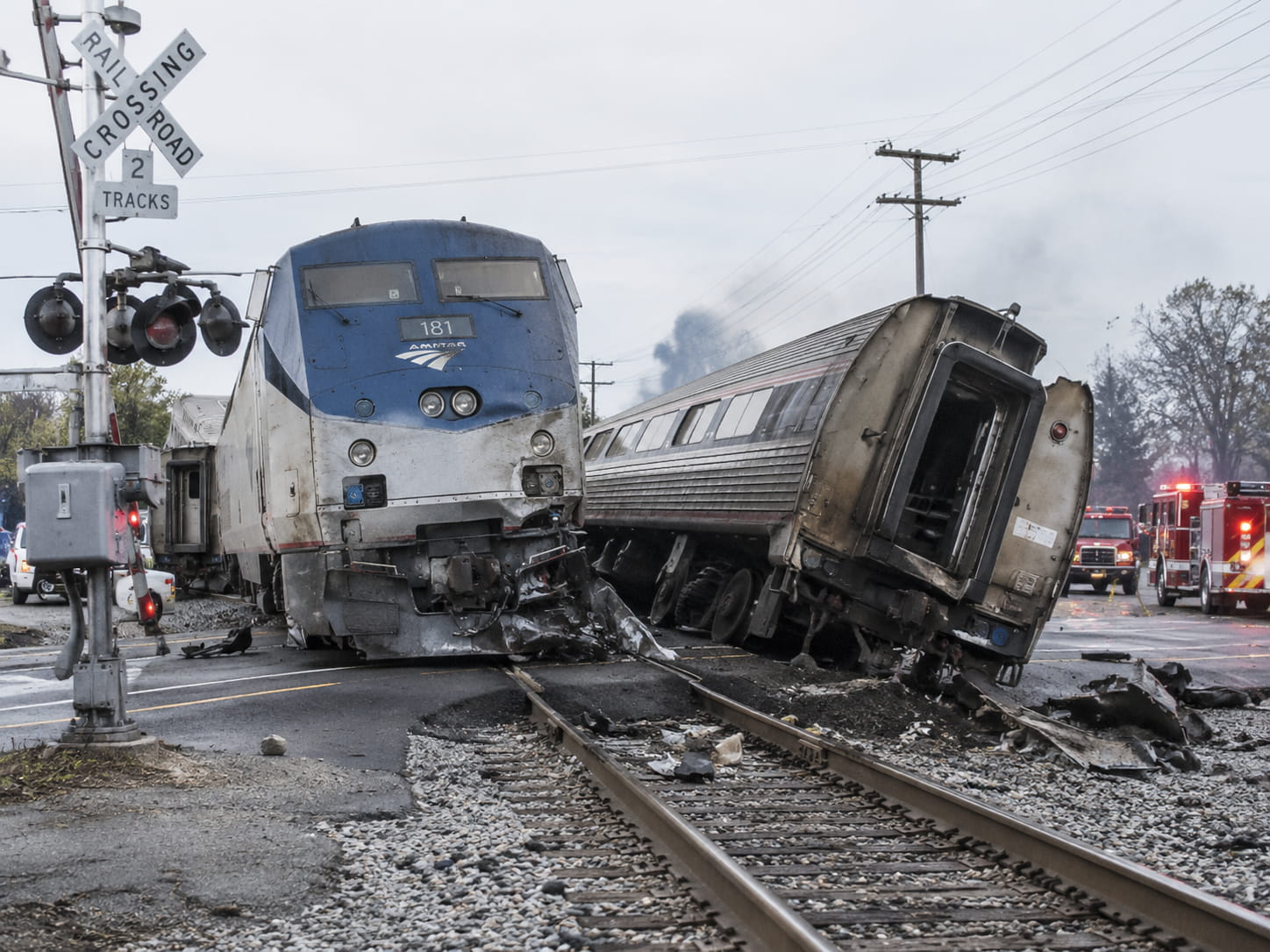




Train Accident Attorney
Claims involving rail operators, crossing safety, maintenance records, multiple parties, and serious collision injuries.




Claims involving rail operators, crossing safety, maintenance records, multiple parties, and serious collision injuries.
Los Angeles Train Accident Lawyers
Injured in a Train Accident? Eisenberg Law Group PC Is Ready to Fight for You.
Train accidents can cause devastating, life-changing injuries in a matter of seconds. Whether you were a passenger on a train, struck at a railroad crossing, injured on a train platform, or hurt because of unsafe railroad equipment or operations, determining who is responsible can be complicated.
Unlike a typical car accident, a train accident may involve multiple companies, government agencies, contractors, equipment manufacturers, and insurance carriers. Each may have its own attorneys and investigators working immediately to protect its interests.
You deserve someone working just as hard to protect yours.
Train Accident Cases Can Be Extremely Complex
Train accidents are different from ordinary motor vehicle accidents.
Depending on where and how an accident occurred, responsibility could potentially extend beyond the train operator. Railroad companies, transit authorities, maintenance companies, equipment manufacturers, contractors, property owners, and other parties may all need to be investigated.
Evidence can also disappear quickly.
Surveillance footage may be overwritten. Equipment may be repaired. Train cars may be moved. Electronic information may need to be preserved. Witnesses become harder to locate as time passes.
Our attorneys can investigate the circumstances surrounding the accident and work to identify every party that may have contributed to your injuries.
Types of Train Accidents We Handle
Train and railroad injuries can occur in many different ways. Our firm can evaluate cases involving:
- Passenger train accidents
- Commuter rail accidents
- Train derailments
- Train-versus-car collisions
- Railroad crossing accidents
- Pedestrian train accidents
- Train platform accidents
- Subway and light-rail accidents
- Sudden stops or starts causing passenger injuries
- Train door accidents
- Falls while entering or exiting a train
- Defective railroad equipment
- Signal or switching failures
- Poorly maintained railroad tracks
- Unsafe railroad crossings
- Collisions involving freight trains
- Fatal train accidents and wrongful death claims
Even when there is not a major derailment or collision, passengers and pedestrians can suffer significant injuries because of unsafe conditions associated with trains, stations, platforms, crossings, or railroad operations.
What Causes Train Accidents?
Train accidents can happen for many reasons. Determining exactly what occurred often requires a detailed investigation of the accident, equipment, personnel, operating procedures, maintenance records, video evidence, electronic data, and other information.
Potential causes may include:
Operator Error
Train operators and other railroad employees have important responsibilities for passenger and public safety. Speeding, distraction, failure to follow signals, fatigue, or other mistakes can contribute to serious accidents.
Poor Track Maintenance
Railroad tracks, switches, and related infrastructure require regular inspection and maintenance. Damaged rails, defective switches, debris, or other unsafe track conditions can contribute to derailments and collisions.
Signal or Communication Failures
Rail systems depend on signals and communication systems to control train movements. A malfunction or failure to properly follow these systems can have catastrophic consequences.
Defective Train Equipment
Brakes, doors, wheels, electrical systems, warning systems, and other components must operate correctly. Defective equipment or inadequate maintenance can potentially place passengers and the public at risk.
Unsafe Railroad Crossings
Accidents can occur when gates, lights, warning signals, signs, or visibility at railroad crossings are inadequate or malfunctioning.
Excessive Speed
A train traveling too fast for existing track conditions, curves, stations, crossings, or other circumstances may increase both the likelihood and severity of an accident.
Negligent Maintenance
Railroad companies and contractors may be responsible for maintaining trains, tracks, signals, stations, platforms, and other infrastructure. Failing to properly inspect or repair dangerous conditions can lead to serious injuries.
Vehicle Driver Negligence
Not every railroad accident is caused by the railroad. A driver who ignores railroad signals, stops on the tracks, or enters a crossing when it is unsafe may cause a collision that injures train passengers or others nearby.
Our job is to investigate the evidence and determine what happened and who may be legally responsible.
Who Can Be Held Responsible for a Train Accident?
One of the most important parts of a train accident case is identifying every potentially responsible party.
Depending on the circumstances, those parties could include:
- A railroad company
- A train operator
- A public transportation or transit agency
- The owner of the railroad tracks
- A maintenance contractor
- A railroad equipment manufacturer
- A company responsible for signals or crossing equipment
- A property owner
- Another vehicle’s driver
- A third-party contractor
- Other companies involved in railroad operations
There may be more than one responsible party.
Eisenberg Law Group PC can investigate the accident, determine who may be responsible, and pursue claims against the appropriate parties.
What Compensation Can I Recover After a Train Accident?
Every case is different, and the compensation available depends on the facts of the accident and the extent of the injuries.
A train accident claim may potentially seek compensation for:
Medical Expenses
Including emergency care, hospitalization, surgery, physical therapy, rehabilitation, prescriptions, medical equipment, and other treatment.
Future Medical Treatment
Serious injuries may require ongoing medical care, additional surgeries, rehabilitation, or long-term assistance.
Lost Income
If your injuries prevent you from working, your claim may include income lost during your recovery.
Loss of Future Earning Capacity
A permanent injury or disability may affect your ability to perform your previous job or earn the income you could have earned before the accident.
Pain and Suffering
Compensation may be available for the physical pain and suffering caused by your injuries.
Emotional Distress
A serious train accident can be traumatic. Anxiety, fear, emotional distress, and loss of enjoyment of life may form part of an injury claim.
Property Damage
If your vehicle or personal property was damaged during a railroad collision, those losses may also be considered.
Wrongful Death Damages
When a train accident results in death, certain surviving family members may be able to pursue a wrongful death claim.
Our attorneys work to understand not only how you were injured, but how those injuries have changed your daily life.
Train Accident Claims Involving Government Agencies
Some passenger trains, light-rail systems, and transit services involve public entities.
This matters because claims against California government agencies can be subject to different—and significantly shorter—deadlines than ordinary personal injury claims.
For many California personal injury cases, the general statute of limitations is two years from the date of injury. However, when a California public entity may be responsible, an administrative government claim may need to be presented within as little as six months.
There are exceptions and different rules depending on the circumstances.
That is one reason we recommend speaking with an attorney as soon as possible after a train or public-transit accident rather than assuming you have years to take action.
Why Choose Eisenberg Law Group PC After a Train Accident?
Over 32 Years Fighting for Injury Victims
Eisenberg Law Group PC has been representing injured clients for more than three decades. We understand how aggressively defendants and insurance companies can defend serious injury claims.
We are prepared to fight back.
We Know How Insurance Companies Think
Our team includes experience on the insurance-defense side. That perspective helps us recognize the strategies insurance companies may use to reduce the value of injury claims and prepare our cases accordingly.
We Investigate the Entire Accident
A serious train accident may involve far more than one negligent person.
We look at the entire picture to determine what happened, preserve important evidence, identify potentially responsible parties, and document the full extent of our client’s damages.
We Help You Get the Medical Care You Need
Getting appropriate medical treatment following a serious injury is critical.
Our team can help clients access medical care while their case is pending, including situations where they may not have the money available to pay medical expenses upfront.
You’re More Than a Case Number
Eisenberg Law Group PC is a family-run firm.
We take the time to understand our clients, their injuries, their families, their work, and how an accident has changed their lives.
That information matters when building a claim that accurately demonstrates everything our client has lost.
No Attorney’s Fees Unless We Win
We handle personal injury cases on a contingency-fee basis.
That means there are no upfront attorney’s fees, and we only collect attorney’s fees if we successfully recover compensation for you.
Our Approach to Train Accident Cases
- Get You the Medical Attention You Need
Your recovery comes first. We help you obtain appropriate treatment and begin documenting your injuries.
- Preserve and Gather Evidence
We work to obtain the evidence necessary to determine what happened. Depending on the accident, this could include photographs, surveillance footage, witness statements, railroad records, medical documentation, electronic information, and other evidence.
- Identify the Responsible Parties
Train accidents may involve multiple defendants. We investigate the roles of railroad operators, transit agencies, contractors, equipment manufacturers, and other potentially responsible parties.
- Document the Full Impact of Your Injuries
Medical bills are only one part of a serious injury claim.
We examine lost income, future medical care, pain, emotional suffering, limitations on your daily activities, and the ways your injuries have affected your family and your future.
- Fight for Full and Fair Compensation
We handle communications and negotiations with insurance companies and opposing parties while you concentrate on recovering.
If a fair resolution cannot be reached, we are prepared to pursue the case through litigation.